Skip to main content [Accesskey 'S']Go to home page [Accesskey '1']
Are you a business customer?
  • Broken down?|
  • Had an accident?|
  • Help and support
  • Breakdown cover
  • Report a breakdown
  • Personal breakdown cover
  • Multicar breakdown cover
  • Family breakdown cover
  • European breakdown cover
  • Motorbike breakdown cover
  • Electric car breakdown cover
  • Business breakdown cover
  • Caravan and motorhome breakdown cover
  • Instant breakdown cover
  • Report an accident
  • Wrong fuel assistance
  • Manage your cover
  • Breakdown guides
  • Car insurance
  • Multi-Car Discount
  • Van insurance
  • Electric car insurance
  • Short term car insurance
  • Motorbike insurance
  • Car insurance guides
  • Home insurance
  • Buildings insurance
  • Contents insurance
  • Home insurance guides
  • Travel insurance
  • Backpacker travel insurance
  • All insurance products
  • Car insurance claim
  • Home insurance claim
  • Manage your policy
  • MOTs
  • Car servicing
  • Mobile mechanics
  • Diagnostics
  • Brake pads and discs
  • Car battery replacement
  • Car key replacement
  • Oil and filter change
  • Vixa proactive car care
  • Wrong fuel assistance
  • Car warranty
  • Car servicing guides
  • MOT guides
  • Used cars for sale
  • New cars to lease
  • AA cars and vans
  • Car history check
  • Car warranty
  • Car finance
  • Sell your car
  • Vehicle inspection
  • Vehicle delivery
  • Car reviews
  • Car buying guides
  • Driving School
  • Driving instructor training
  • Driving School franchise
  • EV Driving School franchise
  • Driving instructor guides
  • Driving lessons
  • Refresher driving lessons
  • AA Driving Theory app
  • Manage your lessons
  • Learner driver insurance
  • Learner driving advice
  • Personal loans
  • Car loans
  • Debt consolidation loans
  • Home improvement loans
  • Manage your loan
  • Savings accounts
  • Easy Access Savings
  • AA Member Saver
  • Manage your savings
  • All finance products
  • Finance guides
  • Route planner
  • Traffic news
  • Mileage calculator
  • Fuel price report
  • Travel insurance
  • Backpacker travel insurance
  • Atlases travel guides and driving kits
  • Travel ideas and places to stay
  • Driving advice

Autonomous Emergency Braking (AEB)

Cars that brake automatically

The most important new car safety system cuts injury and damage claims

Modern cars are much safer and accidents much more survivable than they used to be – thanks largely to Euro NCAP.

But drivers and passengers still get seriously injured and cars suffer expensive damage, even in low speed crashes. So, encouraged by insurers, car manufacturers are working hard to bring you cars that can prevent many crashes from happening in the first place.

So far, the most significant advance is a system called Autonomous Emergency Braking (AEB).

The potential’s so great that, despite its relative infancy, AEB is already taken into account in the insurance group rating process. Cars with AEB fitted as standard could now benefit from a reduced insurance group rating.
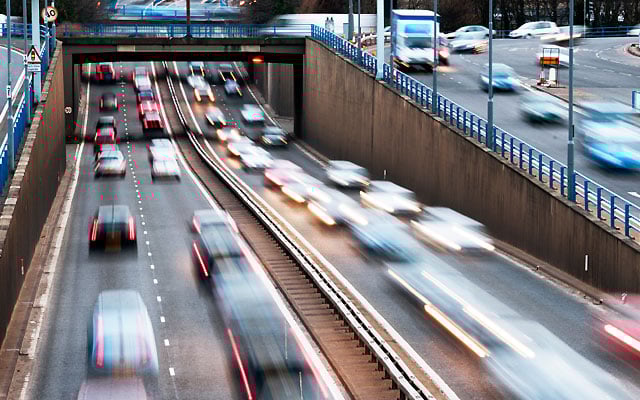
Busy city centre dual carriageway junction

What does AEB do?

It uses sensors mounted behind the rear-view mirror to work out if you're about to have a crash, then applies the brakes automatically to prevent low-speed crashes. It also works to reduce the severity of crashes at higher speeds. 

It’s important that your brakes don’t keep coming on in normal driving so AEB systems tend to intervene 'late and hard’ – they’ll wait until it's clear that any response from the driver is too late, then apply the brakes as fast and hard as possible. In other words, AEB intervenes only once it has decided that it's too late for you to do much about it.

AEB systems are aimed at lower-speed crashes, and accidents involving pedestrian casualties. This is because:

  • 75% of crashes are at speeds under 20mph.
  • 26% of crashes are front-to-rear low speed shunts.
  • Over 400,000 whiplash claims are made annually.
  • More than 6,000 pedestrians are killed or seriously injured on UK roads every year.
  • Pedestrian casualties account for 23% of all killed and seriously injured.

Testing

Euro NCAP started including AEB assessment in its rating scheme from 2014.

Several different tests are used to cover the different crash situations in which AEB should be effective:

City (low speed, low injury risk but high volume):
  • Car approaching the back of a stationary target car at speeds from 10 to 50km/h.
  • Tests at different approach speeds with points awarded for avoidance.
Inter-urban (higher speeds, higher injury risk, lower volume):
  • Car approaching a slower moving target car at approach speeds from 50 to 80km/h.
  • Car approaching a lead vehicle that’s decelerating.
  • Tests at different approach speeds and different headways/deceleration with points awarded for avoidance and mitigation.
Pedestrian (high injury risk but smaller volume):
  • Pedestrian walks out from the nearside.
  • Pedestrian walks out from behind an obstruction (parked car).
  • Pedestrian runs out from the far side.

Insurance group rating

The city test addresses situations most relevant to insurers, so it’s the performance in this test that’s taken into account in the parts and labour part of the group rating calculation.

Parts and labour/damageability is the largest component in insurance group rating, so significant reductions in overall group rating are a possibility.

2 February 2017

More about autonomous driving

  • The future of driverless cars
  • Driver assistance systems
  • Electronic stability control
  • Automatic lights
  • Cruise control

Buy breakdown cover

We get more people back on the road than anyone else
Buy now

Connect with us

x logofacebook iconInsta new
  1. Homearrow-right
  2. Driving advicearrow-right
  3. Safetyarrow-right
  4. Autonomous Emergency Braking
  • About us
  • Gender pay gap
  • Help and support
  • Apps
  • Careers
  • Modern slavery
  • Terms of use
  • Privacy notice
  • Privacy hub
  • Cookies

© Automobile Association Developments Ltd. 2026