With more than 2,000 fords in the UK, chances are you'll come across one at some point. It may seem like a simple short-cut – after all, there’s a road running through it – but that doesn't mean the river is always safe to cross at a ford or watersplash.
You’re unlikely to come across a ford during driving lessons – and they’re not specifically covered in the practical test – so it’s useful to know what to do if you need to drive across a ford.
Here’s how to safely cross the water while keeping your vehicle and passengers safe.
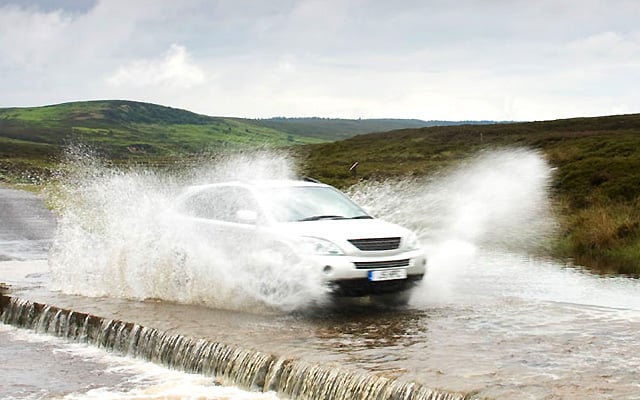
What's a ford?
A ford is a shallow place in a river or stream where it's possible to cross by walking, driving, or riding through the water.
Fords were historically important crossing points before the construction of bridges, but these days are mostly located in rural areas on quiet country lanes.
Fords can vary in depth – from simple water splashes, to deeper crossings – so it’s important to check warning signs and depth gauges to be sure that your vehicle can manage the crossing.
Which vehicles can cross a ford?
Most cars and other wheeled or tracked vehicles can cross a ford, as long as it's a designated crossing. Make sure you check the vehicle's ground-clearance: if you're driving a low-slung car, you might need to reconsider – particularly if the water is deep enough to cover the bottom of the tyres, or the riverbed is rocky or uneven.
Weather and water conditions
Before fording a river or stream, it’s important to assess the situation first to make sure you can cross safely.
Check the water depth, the strength of the current, and the vehicle's wading depth capability (the maximum depth of water a vehicle can safely cross). Make sure you drive slowly and steadily to avoid creating waves that could flood the engine or other critical components.
Depth and flow rate can change particularly quickly after rain, so never assume that the conditions for crossing a ford will always be the same. Aways take the long route round if you have any doubt.
Check for any physical markers or warning signs that provide crossing information. Fords often have a post indicating the water depth, so you’ll be able to see at a glance if the water is too deep to cross.
What are the risks?
Most fords don't have gates or barriers that can be closed to stop you trying to cross when the river's impassable, so don’t follow your sat nav blindly across the water.
Pay attention to the weather and water conditions, and be aware of potential hazards:
Water depth and flow
- Depth – if the water is deeper than anticipated, it can submerge critical parts of your vehicle, such as the engine air intake, leading to engine failure. Remember that a foot of flowing water is enough to move the average family car – six inches can knock you off your feet.
- Current strength – a strong current could push your vehicle downstream, potentially leading to loss of control or even capsizing.
Vehicle capabilities
- Wading depth – exceeding the vehicle’s designed wading depth can result in water entering the engine, transmission, or electrical systems, causing significant damage.
- Traction – slippery or uneven surfaces beneath the water can reduce traction, making it difficult for you to maintain control of the vehicle, and potentially causing it to get stuck.
Mechanical failures
- Hydrostatic lock – water entering the engine can cause hydrostatic lock, a condition where water in the cylinders prevents the engine from turning over, leading to severe damage. It only takes an eggcupful of water sucked into your engine to wreck it.
- Electrical issues – water can short-circuit electrical components, causing malfunctions or complete failure.
Visibility
- Obscured hazards – rocks, holes, and other obstacles may be hidden beneath the water, posing a risk to tyres and the vehicle's undercarriage.
- Limited visibility – murky water can prevent you from seeing these hazards clearly, increasing the risk of accidents.
Environmental impact
- Pollution – vehicles can leak oil, fuel, and other contaminants into the water, harming local ecosystems.
- Erosion – repeated crossings can erode riverbanks and disturb habitats.
Safety
- Drowning risk – strong currents pose a serious risk to anyone who might need to exit the vehicle in an emergency.
- Isolation – getting stranded in a remote area could leave you without immediate help, especially if the vehicle is immobilised or swept away.
Insurance
Damage not covered – some insurance policies may not cover damage incurred during off-road activities, including water crossings, leaving you responsible for repair costs.
How to drive safely through a ford
- Check the depth gauge – avoid water more than 10 cm (4 inches) deep – and pay attention to warning signs/lights.
- Drive slowly and steadily – don’t make a bow wave.
- Once you’ve entered the water, don’t stop or take your foot off the accelerator until you’ve exited on the other side.
- Test your brakes as soon as you can afterwards.
Last updated: 29 October 2024 | Author: The AA


