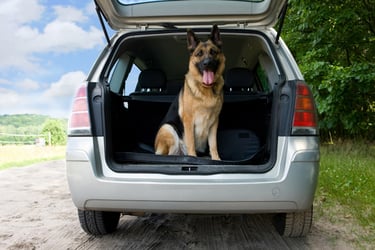
Travelling with pets can be a fun way to take a holiday. Not only do you have someone to run around with on the beach, you don't have to worry about organising space in a kennel, cattery or in a neighbour's garden.
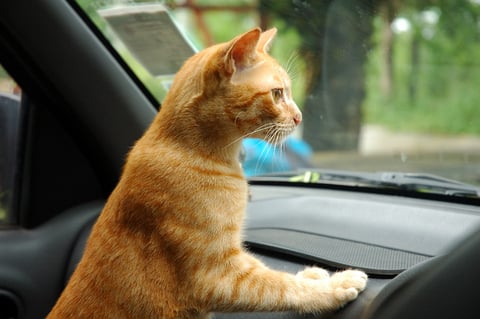
But travelling by car can also be a challenging experience for a pet: they can be uncomfortable, restless, hot – or even car sick. Cats in particular can have a tough time with anxiety and make reluctant driving companions.
With a bit of careful planning and the right safety equipment though, you can have a fun and satisfying car trip with your four-legged friend.
What are the dangers of unsecured pets?
When travelling with pets it’s important to avoid any dangerous activity that could distract the driver and possibly cause an accident. Loose or unrestrained pets can easily distract a driver by moving around the vehicle and getting in the way of the steering wheel and pedals. And if you do have an accident, a pet running loose in the car is more likely to be badly injured, as well as being a danger to everyone else in the car.
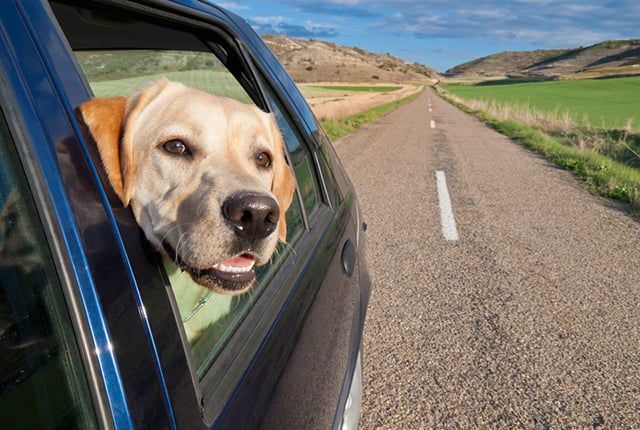
Allowing dogs to hang their heads out of the window during journeys can cause debris or dirt from the road to injure their eyes, nose or mouth.
Pets that make a lot of noise during journeys can also be distracting. But if properly fed, watered and rested, they should hopefully quieten down.
Not properly restraining your pet could even result in driving offences. A noisy or loose pet could stop you from spotting other dangers and lead to driving ‘without due care and attention’. Or worse, could lead to the more serious offence of dangerous driving. The penalty for this is a custodial sentence and a mandatory driving disqualification of at least 12 months.
Tips for travelling with a pet in the car
- Before you get in the car:
•If you’re planning to take your pet on a long car journey and it gets easily agitated, start with some shorter trips to local places – so they get used to the car, its smells, noises and movement
•If you’re travelling out of the country with your pet, check their passport and health status. Take a look at the official requirements and documentation tips
•Take your pet for a long walk to burn off their excess energy. They'll be more inclined to rest and relax if they're worn out
•Feed your pet at least two hours before you travel. Pets travel better on an emptier stomach rather than right after feeding, especially if they suffer from car sickness. If your journey is long enough to cover your pet’s feeding time, bring a light meal for them and leave enough time for them to eat and properly digest it
•If you're using the recommended pet carrier (see equipment below), encourage your pet to enter by using a positive tone and relaxed body language. This can help reduce their anxiety and get them inside a bit quicker
•Remove all leashes and loose collars, and anything else that could be a strangulation hazard, from the crate
•Make sure you give them plenty of water in a spill proof bowl
- Caring for your pet during the journey:
•Factor in regular toilet and exercise breaks, particularly on longer journeys
•Keep them on a lead whilst outside the car to stop them from running into any danger
•Don't feed your dog while you're moving
•Make sure you stick to The Highway Code and keep your pet, yourself and other drivers safe by using restraints. While harnesses are a good way of keeping a dog in place, they aren’t as useful for other pets
•You can also keep your pet secure in the car with:
Cages/crates – although they temporarily give your pet less freedom to move around, pet travel crates or cages are essential for most pets when travelling. While it may be distressing for the animal, a cage stops them moving around the car and avoids any unnecessary distractions for the driver. Many of these can also be secured to stop them moving about
Pet guards – these are caged barriers that attach to the backseat headrests, turning the car boot into a dedicated pet area. They’re ideal for larger or more active pets
- If you break down with a pet in the car:
•On a motorway, leave them inside the car
•If you have to take them out, keep them on a lead
•If we need to transport you somewhere, we'll do our best to accommodate your pet
•Use suitable pet travel carriers, or restraints that are transferable – this helps to ensure that we can transport your pet safely
•Guide dogs can travel with their owners unless there's a specific safety reason not to
•If we can't transport your pet, we'll do what we can to help with alternative arrangements for them
- What to do when you arrive:
•You'll want to stretch your legs and so will your pet. Let them out of their cage or restraints as soon as it’s safe to do so
•They may be nervous being in a new location, so keep a close eye on them when they first get out of the car
•Take them for a walk so they can go to the toilet, especially if it's been a while since you last stopped
•Keep the equipment you brought with you all together – so you won't be hunting around for leashes and other bits when you're ready to leave
- What to do before you come home:
•Just like when you set off, feed your pet two hours before you travel, so they don't have a full stomach in the car
•If possible, take them for a walk to tire them out before the return trip
•Leave plenty of time to get them back in their cage or crate. Hopefully they'll be more used to the car on the return trip, but might still be scared of the cage

Pet owners' equipment checklist
There's lots of pet equipment that can keep animals safe and comfortable during car journeys. Take a look at our list to see if there's anything you might be missing.
- Seat belts/harnesses – dog car harnesses are widely available to make sure your dog’s safely strapped in. They’re a great way to ensure they stay in a stable position and don’t suffer from any sudden movements or stops
- Seat covers – these come in a variety of formats, from padded blankets that go over the backseats to lining for car boots. Most are waterproof, so dogs can lie down after a long, wet walk without soaking the seats.
- Pet survival kits – a great way to make sure that you have all the essentials including:
•Pet food, treats and supplements
•Water and water bowls
•Waste disposal bags
•Any medications and flea treatments
•Pet clothes for cold weather
•Leads
•Pet documents
•Toys
•Photos of your pet (to circulate if they get lost!)
|
For all your other pet needs, we offer pet insurance to prepare for the unexpected |